
Reimagining the Spirit Box: Part III
The complete plans for the Decker Device: parts, wiring, every command and the lab notes, for under $300 and a weekend. Insiders only.

The complete plans for the Decker Device: parts, wiring, every command and the lab notes, for under $300 and a weekend. Insiders only.

Fifty-seven words uttered in eight hours with nobody home: the first published baseline for a spirit box, and the math behind the three that mirrored my day.

A ghost hunter’s spirit box, rebuilt so every word it speaks comes with the odds of saying it by chance.

Can your mind move plasma? A 2023 study says the streams inside an ordinary plasma ball shift when someone aims intention at it, from inside a sealed chamber, at 1-in-17-million odds. I'm replicating it in my basement. Here's why it's worth a serious look.

My new sister site is live: Enigmatic News. Human-curated paranormal, UFO/UAP and high-strangeness headlines, updated every day."

The Buga sphere was the premiere. The Valdivia sphere is the sequel nobody asked for. A breakdown of the 5-step credibility laundering pipeline damaging the UFO field.

Using generative AI and natural language processing on multiple UFO sighting databases, we finally have the tools to answer questions like Hynek first posed in 1972


175 strangers filed independent reports about the same thing. 96% agreed on the color. 100% agreed on the sound. I ran the data on the Tinley Park Lights.

My first approach to analyzing 152,000 UFO sightings had a 34% accuracy rate. I almost published it anyway. Here's what went wrong with semantic embeddings, why I pivoted to LLM extraction, and the methodology that actually worked.

I claimed triangles are nocturnal. That disks are 5x more likely to involve entities. That shadow beings terrify while light beings inspire awe. Here's the sighting ID index so you can verify it yourself.

I analyzed entity encounters in the NUFORC sightings database. Shadowy beings: 68% of witnesses report fear. Greys: 38% involve abduction. Light beings: more awe than fear.

I analyzed 152,000 UFO sighting reports. Some patterns: triangles almost never appear during the day. Disks are 5x more likely to involve entity encounters. And the majority are silent.

I don't expect you to believe this. But you have to acknowledge the timeline: Bitcoin mining and the Mandela Effect didn't just emerge around the same time. They scaled together. Perfectly. The correlation begs an explanation, even if that explanation sounds insane.

Avi Loeb just wrote a Medium article about the interstellar comet I3/Atlas - and while the comet itself is interesting, his commentary on the state of science today is the real takeaway

If we exist within a simulation, we cannot "break out" of it. This isn't a practical limitation—it's a logical impossibility. Instead can we use random behavior to let our simulators know we're on to them?

Building our own UAP 'dog whistle' device using a Raspberry Pi Zero, battery, and custom Python code. Inspired by Skywatcher's tech, we're sharing the complete DIY guide.

This week: Trump says he is looking at UFO disclosure, while Ross Coulthart reports the White House is bypassing the legacy UAP program entirely. Plus a submarine used to lure a craft that defied physics.
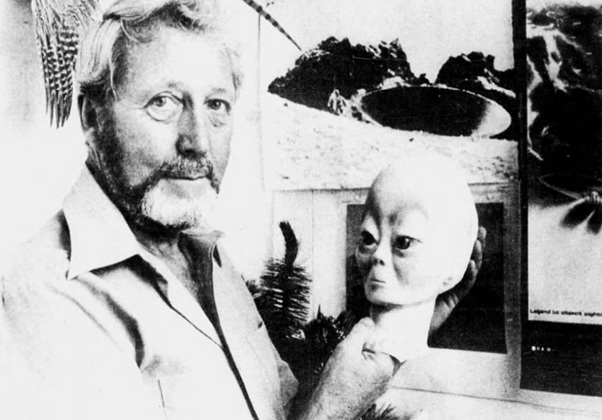
This week: Jay Stratton claims Lockheed holds 12 nonhuman craft and a CIA official blocked retrieval, while Sen. Warner says Chinese drones, not UAP, shut Langley AFB for 17 days.